Attendance Management Software: Key Features and Business Benefits
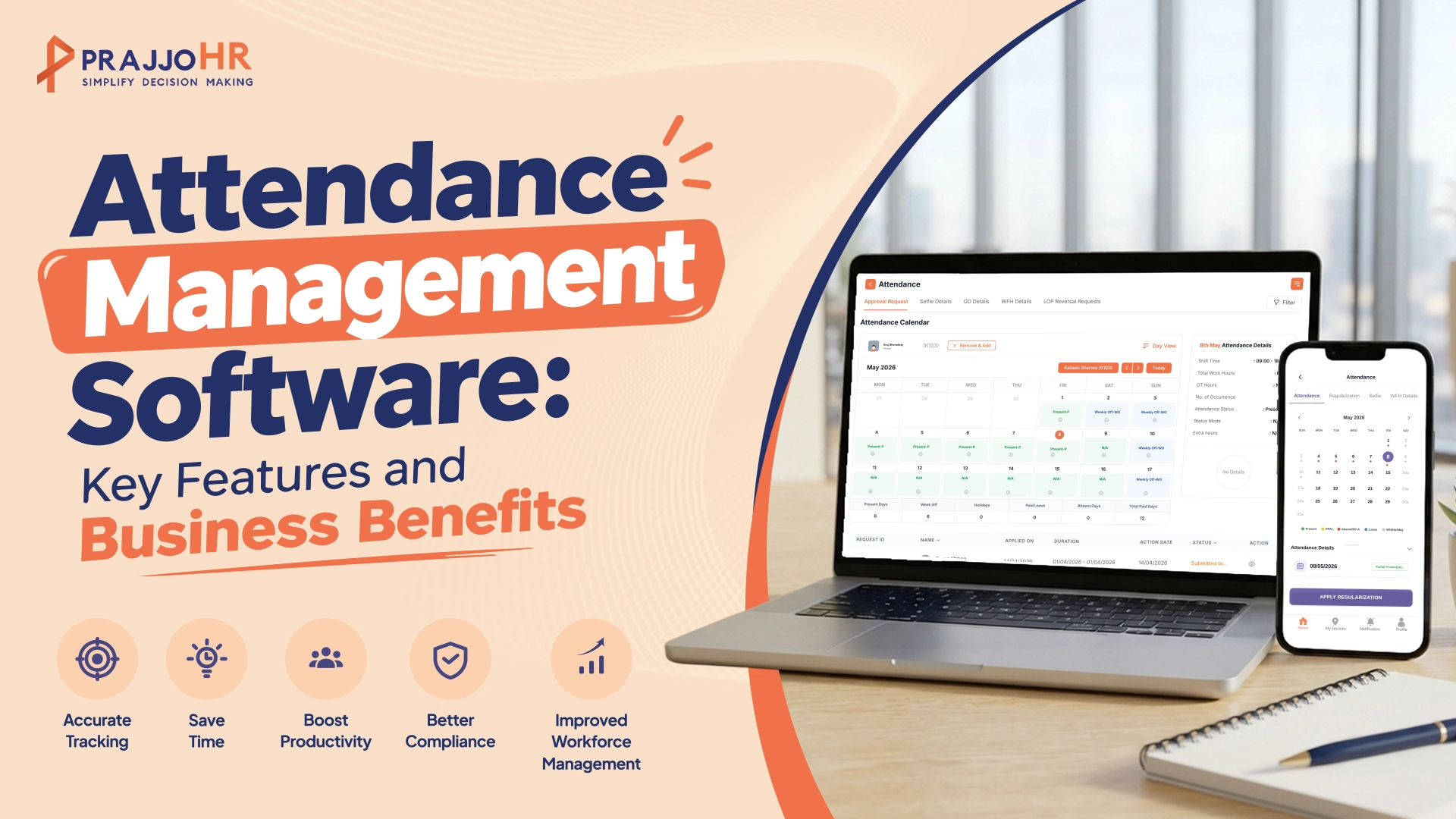
Tracking employee attendance may look like a simple task, but it involves much more than recording when someone arrives at work and leaves. HR teams also have to keep track of employee shifts, late arrivals, early departures, overtime, leave, and daily working hours.
When these tasks are handled manually, even a small mistake can create confusion. An incorrect attendance record may affect salary calculations, while missing information can make it difficult to understand employee work patterns.
This is where attendance management software can make daily work easier. It helps businesses track employee attendance, check working hours, and maintain records without relying on registers or spreadsheets. This allows HR teams to save time and focus on other important tasks.
What Is Attendance Management Software?
An attendance management system gives businesses a better way to handle employee attendance without spending hours checking registers or spreadsheets. It helps HR teams keep track of work schedules, late arrivals, overtime, and leave while keeping employee information organized.
With attendance management software, managers can review attendance records more easily and identify issues such as frequent absences or missed entries. This makes it easier to manage daily work schedules and maintain accurate records across the organization.
How Does an Attendance Management System Benefit Businesses?
As a company grows, managing attendance manually becomes harder. More employees, different shifts, multiple offices, and regular leave requests can increase the workload for HR teams.
An attendance management system helps bring these activities together and makes everyday attendance tasks easier to manage.
Here are some important benefits:
- Fewer manual errors: Digital records reduce the need to enter attendance details repeatedly.
- Better time tracking: HR teams can review working hours, late arrivals, early exits, and overtime.
- Easier shift management: Employees can follow their assigned shifts and weekly off days.
- Improved payroll accuracy: Attendance and approved leave records support salary calculations.
- Clear employee records: HR teams and managers can review attendance information when needed.
The main benefit is better control over attendance data. Employees can understand their records more clearly, while HR teams can spend less time on routine administrative work.
Manual Attendance vs. Biometric Attendance: What's the Difference?
Manual attendance relies on registers or spreadsheets, while biometric attendance uses devices to verify an employee's identity through fingerprints or other supported biometric methods. Both methods record attendance, but they differ in accuracy, effort, and ease of management.
| Comparison Point | Manual Attendance | Biometric Attendance |
|---|---|---|
| 1. Recording | Attendance is entered into registers or spreadsheets. | Employees mark attendance using a biometric device. |
| 2. Accuracy | Manual entries can contain mistakes or missing records. | Digital recording helps reduce manual entry errors. |
| 3. Time and effort | HR teams may calculate working hours manually. | Automatic recording reduces routine attendance work. |
| 4. Attendance fraud | Records may be changed or entered incorrectly. | Identity verification helps reduce buddy punching. |
| 5. Reporting and payroll | Reports and payroll records require manual updates. | Digital records make reporting and payroll processing easier. |
Biometric systems help businesses track employee attendance more accurately. However, modern attendance management software can also support mobile and web-based attendance, giving businesses more flexibility based on their work arrangements.
Important Features of Modern Attendance Management Software
A good attendance management system should do more than record punch-in and punch-out times. It should help HR teams manage daily attendance, shifts, leave records, and working hours without unnecessary manual work.
Here are some important features to look for.
1. Multiple Ways to Record Attendance
Employees can mark attendance through biometric devices, web-based systems, or mobile applications, depending on the software setup. This gives businesses flexibility in how they record attendance.
2. Shift and Working Hours Management
HR teams can create different shifts and assign employees to fixed or rotational schedules. It records work hours, late arrivals, early departures, and overtime based on company rules.
3. Leave and Attendance Integration
Approved leave can be connected with attendance records, reducing repeated manual updates. HR teams can also manage half-day leave, short leave, leave balances, and leave history.
4. Location-Based Attendance Policies
Businesses with multiple offices can set attendance rules according to office location, employee grade, or department. This helps teams follow their assigned schedules and company rules.
5. Attendance Reports and Analytics
Daily, monthly, overtime, and absenteeism reports help HR teams understand attendance patterns. Reports can also be exported to Excel for further review and record-keeping.
6. Payroll Integration
Attendance data can be transferred to payroll software to support salary calculations, overtime payments, and attendance-related deductions. This reduces repeated data entry and helps HR teams prepare payroll more efficiently.
How Attendance Software Helps Employees and HR Teams
Attendance management software benefits both employees and HR teams. It gives both sides better access to attendance information and reduces confusion about working hours and leave records.
Some practical benefits include:
- Easy Access to Attendance Records: Employees can check their attendance history and working hours through available self-service tools.
- Better Leave Tracking: Employees can view their leave balance and review their recorded leave details.
- Fewer Attendance Queries: Clear digital records make it easier to check missing punches and working hours.
- Clear Records: Employees can check their attendance details and report mistakes before salary processing.
- Smoother Salary Processing: Connected attendance and payroll records help reduce repeated data entry and calculation errors.
For example, if an employee wants to check their attendance for the month, they can view the available records instead of asking HR to search through multiple spreadsheets. This saves time for both the employee and the HR team.
What Makes Prajjo HR Attendance Management Software Useful?
Prajjo HR is an all-in-one HR management system , that helps businesses manage attendance, shifts, working hours, and other daily HR tasks in one place, making employee management easier and more organized.
Prajjo HR offers an attendance management solution designed to help businesses manage employee attendance, working hours, shifts, and related records in one system. Its connected features support everyday HR tasks and help reduce manual work.
Some key features of Prajjo HR include:
Flexible Attendance Tracking:
Supports biometric, web-based, and mobile attendance methods, depending on the setup, so businesses can choose suitable ways to record attendance.
Shift and Policy Management:
Helps HR teams manage rotational shifts, weekly offs, holidays, and attendance rules based on location or employee grade.
Leave and Attendance Integration:
Connects approved leave with attendance records to help maintain consistent employee information and reduce repeated updates.
Payroll Integration:
Transfers attendance data to payroll to support salary calculations and attendance-related deductions.
Prajjo Connect:
Prajjo Connect , provides employees with access to their attendance history, working hours, and leave balances through web and mobile applications, making it easier to manage attendance and check important HR information anytime.
Prajjo Insight:
Prajjo Insight is an employee monitoring software that helps businesses track employee activity and understand how working hours are used. It provides better visibility into employee work patterns and helps managers review workforce productivity.
Unlike basic attendance tools, Prajjo Insight , goes beyond tracking employee attendance by offering insights into employee activity and work patterns. This helps businesses identify productivity gaps and understand how effectively working time is being used.
By combining employee monitoring with workforce insights, Prajjo Insight helps businesses make informed decisions, improve work management, and build a more productive work environment.
These features can be useful for growing businesses that need a more organized way to manage employee attendance across teams and locations.
How to Choose the Right Attendance Management Software
Not every business has the same attendance needs. A small office may need basic attendance tracking, while a larger organization may require multiple shifts, location-based rules, leave integration, and detailed reports.
Before choosing a system, businesses should consider these five points:
- Ease of use: Choose software that employees and HR teams can use without difficulty.
- Attendance methods: Check whether it supports the biometric, web, or mobile options your business needs.
- Shift flexibility: Make sure it can handle working hours, rotational shifts, holidays, and weekly offs.
- Payroll and leave integration: Look for connections that reduce repeated data entry and help maintain accurate records.
- Reports and employee access: Check whether HR teams can generate useful reports and employees can view their own records.
It is also helpful to check the software's data security, support options, and ability to meet your company's future needs.
The right choice is not necessarily the system with the most features. It is the one that fits your business processes and makes attendance management easier.
Conclusion
Attendance management is about more than knowing who arrived on time. It helps businesses maintain accurate work-hour records, manage shifts, track leave, and prepare payroll with fewer manual steps.
As companies grow, managing these tasks through spreadsheets and registers can become difficult. Attendance management software offers a more organized way to handle daily attendance and gives HR teams better access to employee records.
Prajjo HR brings attendance tracking, shift management, leave integration, payroll connectivity, employee self-service through Prajjo Connect, and analytics through Prajjo Insight together to support these needs.
If your business wants to improve the way it manages employee attendance, explore the Prajjo HR Attendance Management System and see how its features fit your organization's requirements.
Frequently Asked Questions (FAQs)
1. What is attendance management software?
Attendance management software is a digital tool that helps businesses track employee working hours, manage shifts, record leave, and maintain attendance records in one place.
2. What are the main benefits of attendance management software?
It reduces manual work, improves attendance tracking, helps manage shifts, and supports accurate payroll calculations through organized employee records.
3. What is the difference between manual and biometric attendance?
Manual attendance uses registers or spreadsheets, while biometric attendance verifies employee identity through devices such as fingerprint scanners to record attendance digitally.
4. How does attendance management software help with payroll?
It provides working-hour, overtime, and leave records that can be connected with payroll software to support salary calculations and reduce manual data entry.
5. What features does Prajjo HR attendance management software offer?
Prajjo HR supports attendance tracking, shift management, leave integration, payroll connectivity, employee self-service through Prajjo Connect, and attendance analytics through Prajjo Insight.
Experience Next-Generation
HR Software in Action
People-Centric HRMS: AI That Aligns Mission, People & Performance