Employee Lifecycle: Importance, Challenges & the Role of HR Software
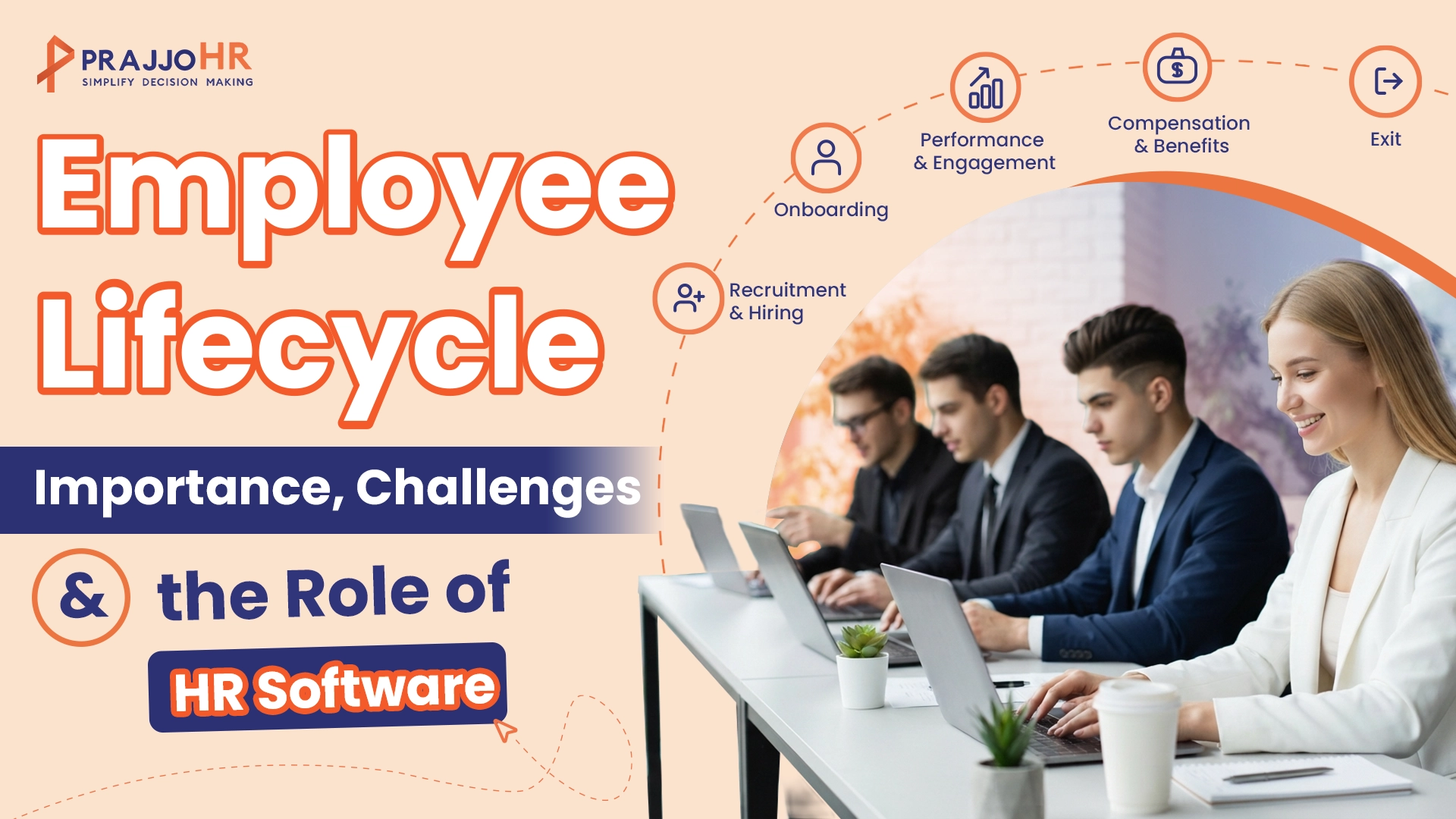
An employee’s journey with a company starts before they are hired and continues until they leave the organization.
From attracting the right candidates to supporting their growth, performance, engagement, and exit, every step forms part of the employee lifecycle.
A well-managed employee lifecycle helps organizations create a smoother journey for their employees while making HR processes more organized. It enables HR teams to better understand employee needs and provide the right support throughout their journey with the company.
Modern HR teams are increasingly using technology to bring different parts of the employee journey together. With the right systems, activities such as recruitment, onboarding, attendance, payroll, performance, and employee engagement can be managed more efficiently.
What Is the Employee Lifecycle?
So, what is employee lifecycle? It describes the complete journey an employee goes through within an organization, beginning with their first interaction with the company.
This journey continues through hiring, joining, development, engagement, and retention before eventually reaching the employee's exit from the organization.
The employee lifecycle process goes beyond routine HR paperwork and administrative tasks. It also includes the experiences, interactions, and opportunities employees receive throughout their relationship with the company.
Each stage of the employee journey can shape how an employee views and experiences the organization. A good hiring experience can create a positive first impression, while proper onboarding can help a new employee become comfortable and productive.
The employee journey typically includes seven key stages:
- Attract
- Recruit
- Onboard
- Develop
- Engage
- Retain
- Offboard
These employee lifecycle stages are closely connected, and the experience at one stage can influence an employee’s journey through the next.
Managing each stage effectively helps businesses create a more consistent employee experience and build a positive workplace environment.
Why Is Employee Lifecycle Management Important?
Employees interact with an organization in many ways throughout their employment. They apply for leave, receive salaries, attend training, participate in performance reviews, communicate with managers, and eventually complete exit formalities.
Employee lifecycle management brings different HR activities together to create a more organized employee journey.
Instead of managing each HR task separately, it helps HR teams look at the employee experience as a whole. This makes it easier to find gaps, improve processes, and provide timely support.
1. Creates a Better Employee Experience
Every interaction with HR can affect the overall employee experience. Well-organized processes for onboarding, leave, attendance, payroll, and employee requests help HR teams manage routine activities more efficiently.
When employees know where to find information and how to complete HR activities, they can spend less time dealing with administrative issues.
2. Reduces Repetitive HR Work
HR teams often spend considerable time handling routine activities such as collecting information, updating records, sending reminders, and managing approvals.
A structured lifecycle approach can standardize these activities and reduce unnecessary manual work, giving HR more time for strategic responsibilities.
3. Keeps Employee Information Organized
Managing employee information can become challenging when data is scattered across spreadsheets, emails, documents, and multiple applications.
Centralized employee records make it easier for HR teams to find accurate information and maintain a clear history of an employee throughout their journey.
4. Helps Improve Employee Retention
Employees are more likely to stay when they receive opportunities to grow, feel recognized, and have a positive experience at work.
By monitoring different stages of the employee lifecycle, HR teams can identify areas that may affect satisfaction and retention before they become bigger problems.
5. Supports Better HR Decisions
Employee lifecycle data can provide useful information about recruitment, attendance, performance, engagement, and turnover.
HR teams can use these insights to understand workforce patterns and make decisions based on actual information rather than assumptions.
7 Stages of the Employee Lifecycle
The employee lifecycle stages cover the key steps an employee experiences throughout their journey with an organization.
Although the exact process can vary between businesses, these seven stages provide a simple way to understand the complete employee journey.
Each stage has a different purpose, but all seven work together to create the overall employee experience.
1. Attract
The employee lifecycle starts before someone applies for a job. At the attraction stage, potential employees first discover the organization and decide whether they would like to work there.
Company reputation, culture, salary, career opportunities, workplace environment, employee reviews, and employer branding can all influence this decision.
A strong attraction strategy should clearly communicate what the organization offers and why talented people should consider joining it.
2. Recruit
Once a candidate becomes interested, the recruitment stage begins. This involves finding suitable candidates, reviewing applications, conducting interviews, evaluating skills, and selecting the right person.
A clear recruitment process helps HR teams manage candidates efficiently while keeping communication organized. It can also create a positive candidate experience before the person officially becomes an employee.
Recruitment involves more than simply filling open positions. It is also about finding people whose skills and expectations match the organization.
3. Onboard
Once an employee accepts the offer, onboarding helps them become familiar with the organization, their role, team, workplace, and important company policies.
It may include document collection, joining formalities, training, system access, team introductions, and initial goal setting.
A structured onboarding management system helps new employees understand their responsibilities, complete important joining activities, and get the support they need during their first few days and weeks.
A well-planned onboarding experience can also help employees settle into their roles faster, build connections with their team, and feel more comfortable within the organization from the start.
4. Develop
Employee development continues long after onboarding. Providing employees with opportunities to learn and grow helps them build new skills and prepare for future responsibilities.
Training, mentoring, coaching, upskilling, reskilling, certifications, and career development programs can all support this stage.
Development benefits both sides. Employees gain opportunities for professional growth, while businesses can build the skills they need for future roles and changing business requirements.
5. Engage
Employee engagement is about how connected employees feel to their work, teams, managers, and the organization they work for.
Regular communication, recognition, feedback, supportive leadership, career opportunities, and a healthy workplace culture can influence engagement.
A strong employee experience is closely connected to engagement. When employees feel heard, valued, and supported, they are more likely to develop a stronger connection with their workplace.
Engagement should not be treated as a one-time activity. It should be supported through regular interactions throughout the employee lifecycle.
6. Retain
The retention stage focuses on keeping valuable employees within the organization.
Employees may choose to leave when they see limited career growth, poor management, lack of recognition, inadequate compensation, or an unsatisfactory workplace experience.
Organizations can improve retention by providing career opportunities, recognizing employee contributions, supporting development, listening to feedback, and creating a positive work environment.
Retention should begin before an employee starts considering another opportunity. Regular feedback and employee engagement can help businesses understand concerns earlier.
7. Offboard
Offboarding is the final stage of the employee lifecycle and begins when an employee leaves the organization.
It can involve resignation processing, notice period management, knowledge transfer, asset collection, access removal, exit interviews, documentation, and full and final settlement.
A structured exit process helps ensure that responsibilities are transferred and important administrative activities are completed properly.
The final experience also matters. A professional offboarding process can help an organization maintain a positive relationship with former employees even after they leave.
Why Is Employee Lifecycle Management Important for Businesses?
A well-planned approach to employee lifecycle management can help businesses manage more than everyday HR administration. It brings people, processes, and employee information together across the complete journey.
When each stage is handled effectively, organizations can maintain smoother processes and improve interactions between HR teams and employees.
1. Improves Workforce Efficiency
Connected HR processes can reduce the need to collect and update the same employee information repeatedly.
This allows HR teams to save time and focus on employee development, workforce planning, and other important activities.
2. Supports Employee Growth
A well-managed employee lifecycle can provide employees with opportunities to learn, receive feedback, strengthen their performance, and plan their careers.
This helps businesses build internal talent and reduce complete dependence on external hiring for future positions.
3. Improves Retention
A clear understanding of the employee journey can help businesses spot factors that may lead to dissatisfaction or employee turnover.
Employee feedback and workforce data can then be used to improve workplace policies, management practices, career opportunities, and employee support.
4. Creates Consistent HR Processes
As organizations expand, different teams may begin using different approaches to manage HR activities.
A clear employee lifecycle strategy can bring greater consistency to important processes across teams, departments, and locations.
5. Helps Businesses Make Data-Driven Decisions
Information collected throughout the employee lifecycle can offer useful insights into hiring, attendance, performance, engagement, turnover, and employee movement.
HR leaders can use these insights to recognize patterns and make more informed workforce decisions using actual data.
Common Challenges in Managing the Employee Lifecycle
Managing the complete employee journey can become difficult when HR processes depend heavily on manual work and disconnected systems.
As the workforce grows, these problems can affect both HR efficiency and the employee experience.
1. Disconnected HR Systems
Recruitment, attendance, payroll, performance, and employee records may be managed through separate platforms.
This can make it difficult to move information between processes and maintain a complete view of the employee.
2. Repetitive Manual Work
HR teams may repeatedly enter employee information, send reminders, follow up on approvals, and prepare reports manually.
This takes time and also increases the possibility of human errors.
3. Difficult Onboarding
Without a structured onboarding workflow, documents, training, system access, and other joining activities may not be completed on time.
This can make the first experience of a new employee less organized.
4. Limited Employee Self-Service
Employees often need quick access to information such as payslips, attendance, leave balances, policies, or HR documents.
When every request requires HR assistance, it can increase the workload of HR teams and delay employee requests.
5. Difficult Performance Tracking
Managing goals, KPIs, KRAs, feedback, and appraisals through spreadsheets or separate files can make performance tracking complicated.
HR and managers may also find it difficult to get a complete picture of employee performance over time.
6. Limited Workforce Visibility
When workforce information is spread across different systems, HR teams may struggle to understand employee activity, productivity patterns, and workforce trends.
This can make it harder to identify problems early and take timely action.
How HR Software Can Improve Employee Lifecycle Management?
Modern HR software can connect different parts of the employee journey and reduce the dependence on manual HR processes.
An employee lifecycle management software solution can help organizations manage multiple HR functions through a more centralized and connected system.
1. Recruitment
Recruitment software can help HR teams organize job openings, candidate information, applications, interviews, evaluations, and offers.
A structured recruitment workflow can make hiring easier to track while reducing delays between different stages.
2. Onboarding
Onboarding tools can organize document collection, joining tasks, employee information, training, and other activities required when a new employee joins.
HR can assign tasks to the right people through an onboarding management system and track whether important onboarding activities have been completed.
3. Core HR
Core HR provides a central place to manage employee information such as personal details, employment information, organizational details, and HR records through an HR management system.
Having this information in one system can make employee management easier throughout the lifecycle.
It also helps HR teams access updated employee data quickly and reduce manual paperwork.
4. Attendance
Attendance management helps organizations track employee attendance, shifts, working hours, regularization, and related information.
When attendance is connected with other HR functions, HR teams can reduce manual updates and maintain more consistent records.
5. Payroll
Payroll is closely connected with several parts of the employee lifecycle, including salary structures, attendance, leave, employee changes, and exits.
Payroll software can help HR teams process salaries and maintain payroll-related information in a more organized way.
6. Performance Management System
A Performance Management System (PMS) can help organizations manage goals, KPIs, KRAs, reviews, feedback, and appraisals.
It provides a structured way to monitor employee performance, track progress against goals, and identify areas where employees may need support or improvement. Regular performance discussions help managers provide timely feedback, recognize good work, and keep employees aligned with their responsibilities and organizational goals.
Prajjo HR offers a more connected approach to performance management by helping organizations link employee goals, KRAs, KPIs, feedback, and appraisals in one place. Its PMS is designed to give managers a clearer view of employee progress while helping employees understand their goals and performance expectations.
7. Employee Engagement
HR software can support engagement through employee feedback, surveys, recognition, communication, and other engagement activities.
These tools can help organizations understand employee sentiment and create a more connected workplace experience.
When these HR modules work together, organizations can create a more connected employee lifecycle process, while also improving employee engagement instead of managing each HR activity separately.
How Prajjo HR Supports the Employee Lifecycle?
Managing employees across different stages requires HR teams to handle a large amount of information and many different processes.
Prajjo HR brings multiple HR functions together to help organizations manage these activities through one HRMS platform.
From recruitment and onboarding to attendance, payroll, performance, and employee management, Prajjo HR supports important parts of the employee journey.
With 53+ modules , Prajjo HR provides organizations with a broad set of tools for managing their HR operations and employee lifecycle.
The aim is to make HR processes more connected, reduce repetitive administrative work, and give HR teams better visibility into employee-related activities.
How Prajjo HR Helps Businesses?
1. Streamlines Recruitment and Hiring
Prajjo HR can help HR teams manage recruitment activities in a more organized way, from handling candidates to moving selected employees into the joining process.
This can reduce gaps between recruitment and onboarding while creating a smoother transition for new hires.
2. Makes Onboarding More Organized
HR teams can manage important joining activities, employee information, documents, and onboarding tasks through a structured process.
This helps ensure that new employees receive the required information and support when they join the organization.
3. Connects Attendance and Payroll
Attendance and payroll are closely linked in day-to-day HR operations.
By managing these functions through a connected HR environment, organizations can reduce repetitive data handling and make payroll-related processes easier to manage.
4. Supports Performance Management
Prajjo HR can help businesses structure performance activities around goals, KRAs, KPIs, reviews, and feedback.
This gives managers and HR teams a clearer way to follow employee performance and development.
5. Improves Employee Self-Service
Employees can access important HR-related services without depending on HR for every routine request.
This can reduce HR queries and give employees faster access to the information they need.
6. Supports Better HR Visibility
When different HR activities are managed through a connected platform, HR teams can get a broader view of employee information and processes.
This can help organizations understand their workforce and identify areas where HR processes can be improved.
Overall, Prajjo HR helps businesses bring different parts of the employee journey together instead of managing them as isolated HR activities.
How Prajjo Insight Adds Workforce Visibility
Managing the employee lifecycle is not only about maintaining employee records and completing HR processes.
Businesses also need to understand how work is happening across their workforce, and this is where Prajjo Insight can add another layer of visibility.
Prajjo Insight helps organizations gain greater visibility into workforce activity and productivity patterns.
This additional information can help managers and organizations understand work patterns and identify areas that may require attention.
Key Features of Prajjo Insight
1. Workforce Activity Visibility
Prajjo Insight can provide visibility into employee work activity, helping organizations understand how work is taking place across their workforce.
This can give managers useful information for better workforce planning and management.
2. Productivity Insights
Understanding productivity patterns can help managers identify where teams are performing well and where additional support may be required.
The focus is on using information to support better workforce decisions.
3. Work Pattern Analysis
Different employees and teams may have different working patterns.
Visibility into these patterns can help organizations understand how work is being carried out and identify opportunities to improve processes.
4. Better Management Decisions
Workforce information can provide additional context for managers when reviewing team performance and productivity.
This can support more informed discussions and decisions rather than relying only on assumptions.
5. Improved Workforce Management
When workforce activity information is considered alongside HR data, businesses can gain a broader understanding of their employees and teams.
This can help organizations identify areas for improvement and build more effective workforce practices.
Prajjo Insight can therefore complement Prajjo HR by adding workforce visibility alongside core HR information and processes.
Conclusion
The employee lifecycle covers every major stage of an employee’s relationship with an organization, from attraction and recruitment to development, engagement, retention, and offboarding.
Managing these stages effectively can help businesses improve the employee experience, reduce manual HR work, and build more consistent processes.
With the right employee lifecycle strategy and technology, organizations can connect different HR activities and make employee management more efficient.
Prajjo HR, with its 53+ modules, can help businesses manage multiple HR functions through one connected HRMS, while Prajjo Insight adds another layer of workforce visibility to support better workforce decisions.
FAQs
1. What is the employee lifecycle?
The employee lifecycle is the complete journey an employee experiences with an organization. It generally covers attraction, recruitment, onboarding, development, engagement, retention, and offboarding.
2. What are the 7 stages of the employee lifecycle?
The seven main stages are Attract, Recruit, Onboard, Develop, Engage, Retain, and Offboard. Together, these stages represent the major points in an employee's journey with an organization.
3. Why is employee lifecycle management important?
Employee lifecycle management helps organizations create structured HR processes, reduce repetitive work, improve employee experience, organize employee information, and make better workforce decisions.
4. How does employee lifecycle management software help HR teams?
Employee lifecycle management software can connect recruitment, onboarding, Core HR, attendance, payroll, performance, employee engagement, and other HR activities within a centralized system.
5. How can Prajjo HR support the employee lifecycle?
Prajjo HR provides 53+ HRMS modules that support different areas of the employee journey, including recruitment, onboarding, Core HR, attendance, payroll, performance management, and employee-related processes.
Experience Next-Generation
HR Software in Action
People-Centric HRMS: AI That Aligns Mission, People & Performance