Why Employees Feel Undervalued, and Employers Face Challenges
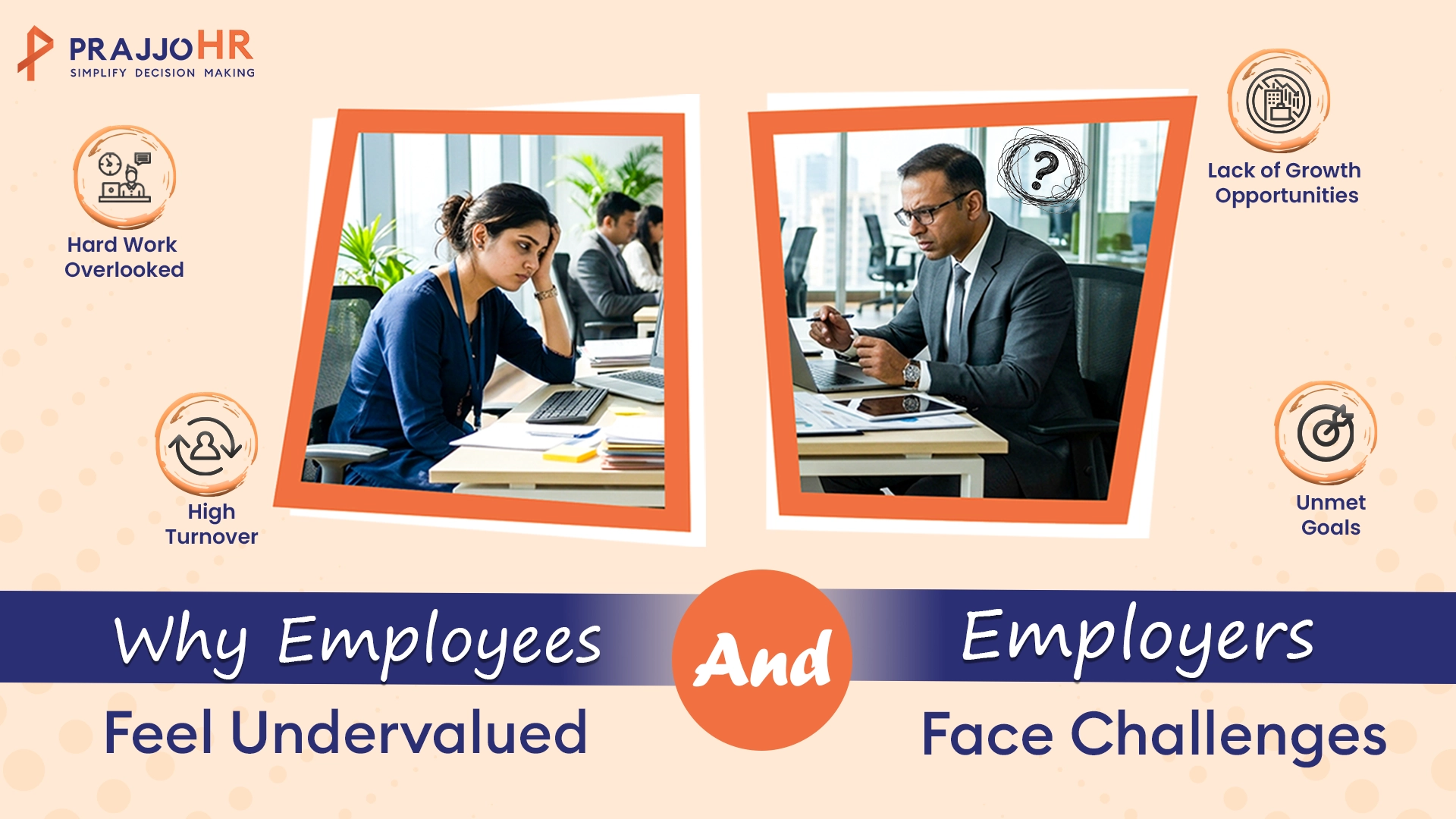
There is a conversation happening in almost every organization right now. Sometimes it is open and direct. Sometimes it happens quietly behind closed doors. Employees feel they are not being recognized for the work they put in. And on the other side of the table, employers feel like no matter what they do, it is never quite enough to keep their teams engaged, motivated, or productive.
This gap between how employees experience work and what employers expect from their workforce is not just a communication problem. It runs much deeper. And if left unaddressed, it leads to high attrition, low morale, and poor business performance.
So what is really going on? Let us break it down honestly.
The Employee Side: I Work Hard But Nobody Notices
When employees say they feel undervalued, most people assume it is about money. And while compensation matters, it is rarely the whole story.
Think about it this way. When was the last time someone at work genuinely acknowledged your contribution? Not just a quick good job in a meeting, but a real and meaningful recognition of the effort you put in? For most employees, the honest answer is that it has been a while.
Here are the most common reasons employees feel undervalued at work.
1. Lack of Recognition and Appreciation
Recognition is one of the most basic human needs, and the workplace is no different. When employees consistently go above and beyond but receive no acknowledgment, no appreciation, no formal reward, they start to question whether their efforts even matter.
The problem is that many organizations rely on informal recognition that depends entirely on whether a manager remembers to say thank you. Without a structured system in place, recognition becomes inconsistent and often gets overlooked completely.
2. No Clear Path for Growth
Employees do not just want a job. They want a future. When someone joins a company and months or even years go by without any clarity on promotions, skill development, or career progression, they begin to feel stuck. That feeling is a quiet signal that the company does not see a future for them, even if the employer thinks otherwise.
This is where performance management becomes very important. If employees do not receive regular feedback, do not know how their performance is being measured, and do not understand what they need to do to grow, they will simply find an organization that will give them those answers.
3. Being Heard Does Not Always Mean Being Listened To
Many companies have open-door policies, employee surveys, and feedback channels. But how often does employee feedback actually lead to visible change? When employees share their concerns or ideas and see nothing happen, they stop speaking up. Silence does not mean satisfaction. It usually means disengagement.
4. Poor Work-Life Balance and Burnout
Overworked employees who feel they cannot take time off without being judged, or who are constantly expected to do more with fewer resources, will eventually hit a wall. Burnout is very real, and it does not just affect productivity. It makes employees feel disposable rather than valued.
5. Inconsistency and Favoritism
Nothing kills team morale faster than the feeling that some people are treated better than others. When leave policies are applied inconsistently, when appraisals seem political rather than merit-based, or when attendance and performance data are not tracked fairly, employees notice. And they resent it deeply.
The Employer Side: We Are Doing Everything Right, But Nothing Works
Now, here is something that does not get discussed enough. Employers are frustrated, too.
Many business owners and HR leaders genuinely believe they are investing in their people. They offer competitive salaries, organize team events, run engagement surveys, and create learning opportunities. And yet attrition remains high, productivity stays flat, and employee satisfaction scores do not improve.
So what is going wrong from the employer's side?
1. No Visibility Into What Is Actually Happening
One of the biggest challenges employers face is the lack of real-time data. If you are managing attendance on spreadsheets, tracking performance through annual reviews, and processing payroll manually, you are working with outdated and incomplete information. You are making important people decisions based on guesswork rather than facts.
Without clear visibility into how employees are performing, where they need support, or how engaged they are day to day, employers simply cannot take the right action at the right time.
2. HR Processes That Take Up Too Much Time
When HR teams are buried in paperwork, manual payroll calculations, and compliance tasks, they have very little time left to focus on what actually matters, which is people. Strategic HR work, like building a strong culture, developing talent, and creating meaningful recognition programs, always takes a backseat when the team is constantly putting out fires.
3. Misaligned Expectations
Employers often set goals at the top level but fail to connect those goals to individual employee targets. When employees do not know how their daily work connects to the company's bigger picture, alignment breaks down. Employers then feel frustrated that teams are not moving in the right direction, while employees feel they are just completing tasks without any real purpose behind them.
4. Reacting, Instead of Planning Ahead
Most organizations operate in a reactive mode. They address problems only after those problems have already damaged morale or caused someone to resign. By the time an employer realizes an employee is disengaged or underperforming, the situation is often already very difficult to fix.
Where the Gap Really Comes From?
The truth is, both sides have valid points.
- Employees are not wrong to want recognition and growth.
- Employers are not wrong to expect effort and commitment.
The problem is that without the right systems and processes in place, both sides end up working with incomplete information.
Employees do not know if they are meeting expectations. Employers do not know how their teams are actually feeling. And when these two realities drift apart, disengagement, attrition, and frustration become the natural outcome.
This is exactly why the way you manage your HR processes matters just as much as what you do with your people.
How Smart HR Software Bridges the Gap
This is where technology plays a very important role. A modern HRMS platform does not just automate paperwork. It creates the foundation for a healthier, more transparent, and better-connected workplace.
Platforms like Prajjo HR are built specifically to address this disconnect. Here is how.
Transparent Performance Management
With Prajjo HR's Performance Management module, employees get regular feedback, clear targets, and a structured review process. They always know where they stand and what they need to do to grow. Employers get accurate, data-backed insights into who their strong performers are and who needs support before it is too late
Consistent and Fair Attendance, Leave Tracking
Inconsistent policies are one of the biggest trust breakers in any organization. Prajjo HR automates leave management and attendance management system so every employee is treated equally and every policy is applied the same way across the board, with no exceptions and no favoritism.
Employee Self-Service That Gives People Control
When employees can access their salary slips, apply for leave, check their attendance, or update their own information without having to follow up with HR repeatedly, it sends a strong message! It tells them that the organization respects their time and trusts them. Prajjo HR's self-service portal does exactly that, giving employees a sense of control and dignity in their daily work life.
Payroll That Is Always Accurate and On Time
Nothing makes an employee feel undervalued faster than a delayed or incorrect salary. Prajjo HR's automated payroll system makes sure salaries are calculated correctly, statutory deductions are handled properly, and payments go out on time every single month without fail.
Real-Time Reports for Better Decisions
Employers no longer need to guess what is happening within their workforce. Prajjo HR's analytics and dashboards give HR leaders and business heads real-time visibility into attendance patterns, performance data, employee engagement levels, and much more. With the right information available, employers can take proactive steps instead of simply reacting to problems.
Recognition and Culture Tools
Building a culture of appreciation is not just about good intentions. It requires the right tools. Prajjo HR's Employee Engagement Suite helps organizations structure recognition programs, track important milestones, celebrate achievements, and build a workplace environment where people genuinely feel seen and valued every day.
Conclusion
The gap between employees and employers is not something you have to accept as normal. It exists because of missing systems, incomplete information, and processes that have not kept up with how people actually work today.
When employees feel seen and supported, they stay longer and perform better. When employers have the right tools, they can lead with confidence instead of frustration.
Closing this gap starts with one honest question. Does your organization have the right setup to support both your people and your business goals?
If the answer is no, Prajjo HR is here to help. Schedule a demo today and see what a difference the right HR platform can make.
Frequently Asked Questions
Q1. Why do employees feel undervalued even when employers think they are doing enough?
This usually happens because there is no structured system for recognition and feedback. Employers may have good intentions but without consistent and visible appreciation, employees simply do not feel it. Good intentions need good processes behind them.
Q2. What is the most common reason employees leave a company?
While salary is one factor, most employees leave because of a lack of growth opportunities, poor management, feeling unrecognized, or not seeing a future for themselves in the organization. These are all issues that better HR processes and clearer communication can address.
Q3. How can HR software help improve employee satisfaction?
HR software like Prajjo HR creates transparency across performance, attendance, payroll, and growth. When employees have clarity on where they stand and feel they are being treated fairly, their satisfaction naturally improves.
Q4. What does employee disengagement actually cost a business?
Disengaged employees are less productive, more likely to make mistakes, and more likely to leave. The cost of replacing one employee can be up to six to twelve months of their salary when you factor in recruitment, onboarding, and lost productivity.
Q5. How does Prajjo HR help employers manage teams more effectively?
Prajjo HR gives employers real time visibility into attendance, performance, and engagement data. This means they can spot issues early, make fair decisions, and focus on building a workplace where people actually want to stay.
Experience Next-Generation
HR Software in Action
People-Centric HRMS: AI That Aligns Mission, People & Performance